QR Codes & PPWR: A Practical Solution for Small Packaging Compliance 2026
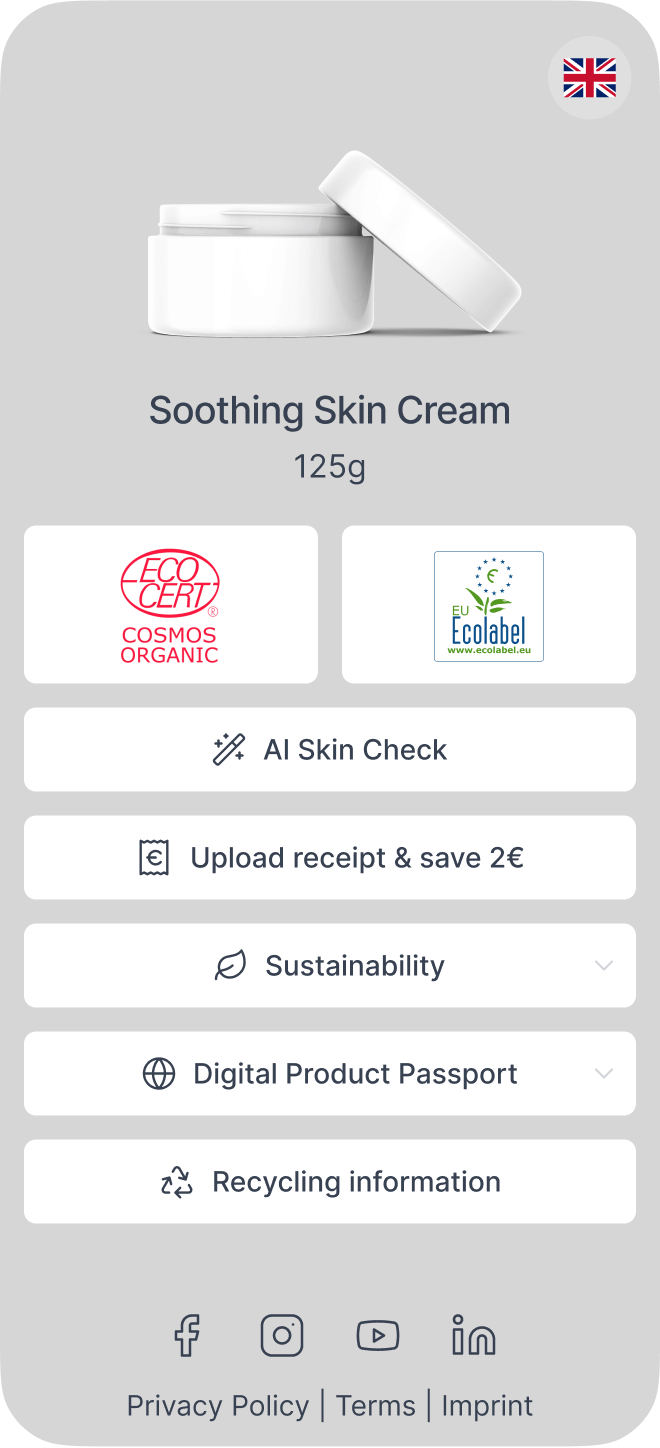
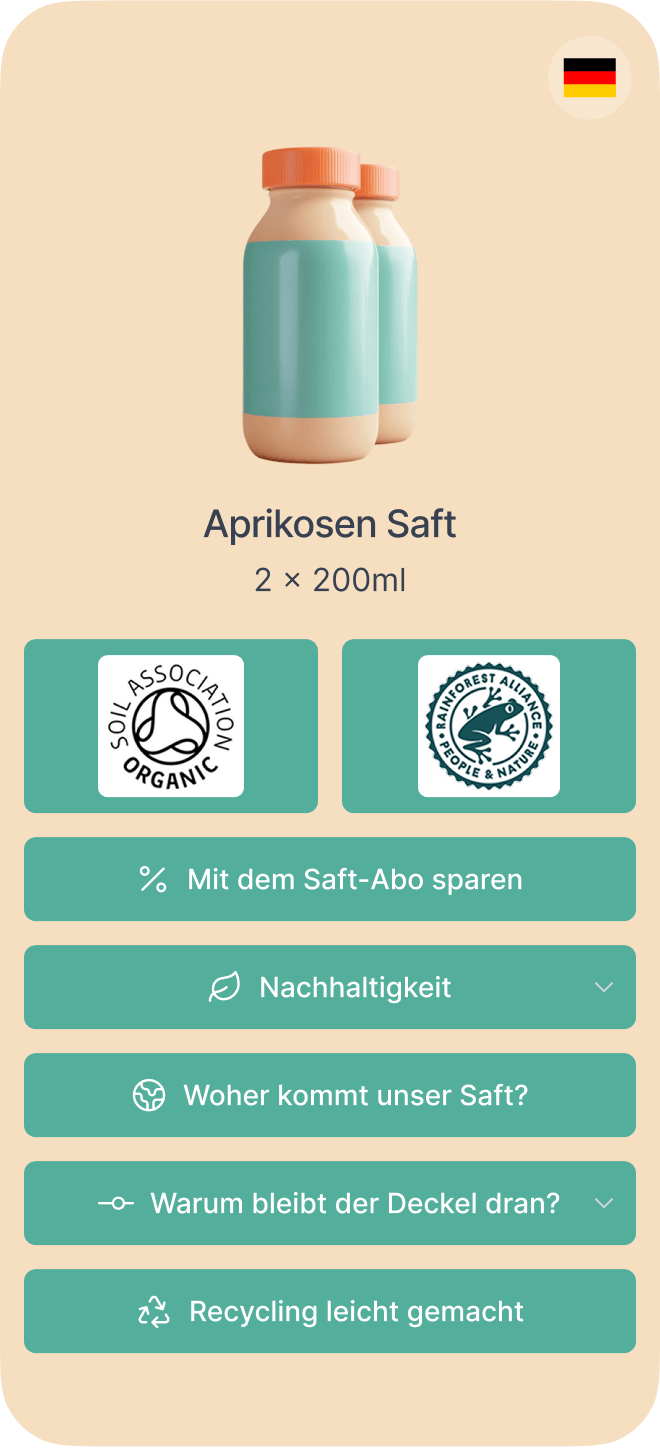
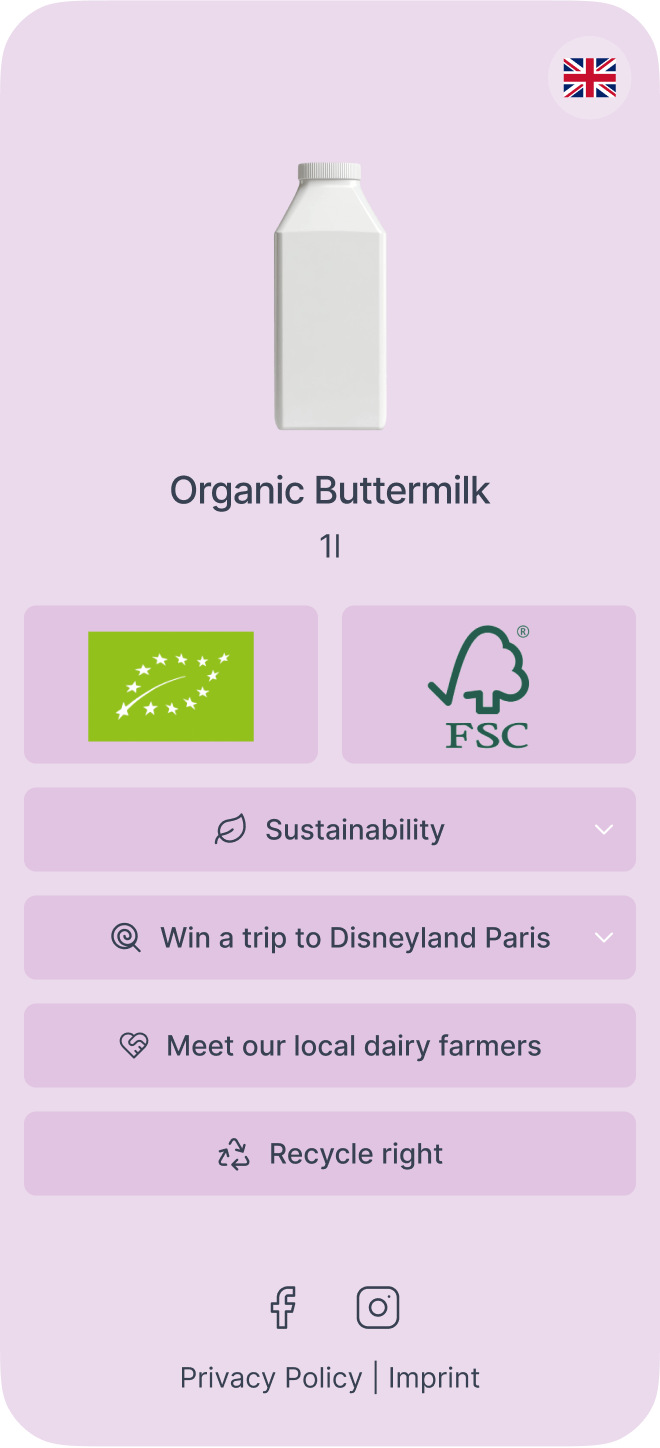
Small packaging can carry PPWR information in a single QR code when marking the pack and its outer packaging is not possible (Article 12(5)). Producer name and postal address may also be given through a QR code (Article 15(6)). The harmonised EU label applies from August 12, 2028 at the earliest.
Last checked: October 5, 2026:
Key dates
- February 11, 2025: The PPWR enters into force (Article 71).
- August 12, 2026: The PPWR applies in all Member States (Article 71, Commission news).
- August 12, 2026: The German Packaging Law Implementation Act (VerpackDG) is in force. It was promulgated on July 13, 2026 (BGBl. 2026 I Nr. 207).
- February 12, 2027: In Germany, the fine provisions for PPWR violations start to apply (§ 68(17) VerpackDG).
- August 12, 2028, or 24 months after the implementing act: The harmonised label with material pictograms applies, whichever date is later (Article 12(1)).
- February 12, 2029, or 30 months after the implementing act: Marking and QR code for reusable packaging apply, whichever date is later (Article 12(2)).
- Up to three years after the labelling rules enter into force: Packaging made before the deadlines may stay on the market (Article 12(12)).
Update, October 1, 2026
Two developments since this article was first published:
- The PPWR entered into force on February 11, 2025 and has applied since August 12, 2026 (Article 71). According to the packaging association EUROPEN, the act is now expected in the fourth quarter of 2026 (EUROPEN, 2026). The harmonised label with material pictograms applies from August 12, 2028 or 24 months after the implementing acts, whichever is later (Article 12(1)).
- On September 30, 2026, the Digital Consumer Information Alliance, a group of around 25 associations including EuroCommerce, FoodDrinkEurope, Cosmetics Europe, and AIM, called for "one product, one EU data carrier." All digital product information from PPWR, ESPR, the Battery Regulation, and the textile rules should sit behind a single code. The Alliance also asks for technological neutrality, so QR codes, RFID, and NFC would all stay possible (EuroCommerce, 2026).
The PPWR entered into force on February 11, 2025 and has applied since August 12, 2026 (Article 71). One requirement is causing real problems for small packaging. Producers must give a type, batch or serial number (Article 15(5)) and their name, trade name or trademark and postal address (Article 15(6)). The address can sit on the pack or in a QR code. If that is not possible, it goes in the documents that come with the product.
That is a lot of information for a small pack. And horticulture is not the only sector running into this. It is just the first to publicly agree on an answer, and that answer is a QR code built on GS1 Digital Link.
Horticulture is the clearest example so far
PPWR puts the labeling duty on whoever finally fills or packs a product. In horticulture, that is usually the producer or the packing operation itself. If a business packs on behalf of an organization such as Landgard, the responsibility shifts to that organization instead.
With that duty landing on thousands of individual growers, and a lot of uncertainty about how to actually meet it, four organizations worked out a joint recommendation: the Zentralverband Gartenbau (ZVG), the Landesverband Gartenbau NRW, the flower wholesale association BGI, and Landgard (Landgard, 2026).
The recommendation, in short:
- Flowers and plants: combine the pot's serial number with a QR code placed on one component of the sales packaging, the pot, the bag, or the label. The code should lead to the required producer information, either directly or via a link.
- Fruit and vegetables: the same information can be handled through the label alone, no QR code needed.
- Transport packaging, such as trays and cartons, is not covered by this recommendation. That marking duty stays with the manufacturer of the transport packaging, not the grower.
The associations describe this as "die pragmatischste Lösung," the most pragmatic solution for producer businesses (Packaging Journal, 2026). Landgard's own communication to its producer network adds a few details worth keeping in mind:
- In Germany, the fine provisions for PPWR violations (§ 66(2) of the Packaging Law Implementation Act, VerpackDG) apply only from February 12, 2027 (§ 68(17) VerpackDG). The PPWR duties themselves, including labelling of sales packaging, apply since August 12, 2026. The PPWR contains no grace period. This does not remove the underlying duty to actually meet the requirements from August 12, 2026 onward, it only pauses enforcement.
- Pots already in stock before August 12, 2026 do not need to be relabeled and can, in theory, be covered by an accompanying delivery note instead. In practice, individual retail customers may still ask for marking directly on the sales packaging.
- Not every open legal question around PPWR has been settled yet. Landgard and the associations say they will keep pushing jointly for clarifications and more workable adjustments to the regulation, independent of this interim recommendation (Landgard, 2026).
The story was picked up widely in the German trade press in the days that followed, including Lebensmittelzeitung (2026), Packreport (2026), and Börse Express (2026).
Some nurseries are already putting the recommendation into practice. Gartenbau Janssen-Velling, a grower based in Geldern, states directly on its website that "jede Verpackung mit einem QR-Code versehen" is used for transparent, traceable documentation of packaging conformity, with the code linking back to a page carrying the legally required details (Gartenbau Janssen-Velling, 2026). It is a concrete look at what the associations' recommendation looks like once it is actually on a product.
What the horticulture associations recommend
The Zentralverband Gartenbau (ZVG), Landesverband Gartenbau NRW, BGI and Landgard recommend a QR code for producer details on sales packaging such as pots, bags and labels (Packaging Journal, August 19, 2026). Their approach has three parts:
- Show a number on the pack. A type, serial or batch number must be visible on the sales packaging and must not be encrypted. The serial number on the underside of many standard pots works. The grower must be able to trace which packaging materials were used, so conformity declarations can be shown to authorities.
- Add a QR code to one component. According to the associations, it is enough to mark one component of a packaging unit, for example the pot, bag or label. [verify]
- Lead the code to name and postal address. The QR code can contain them or link to a page that displays them directly.
The legal basis is Article 15(5) and (6) of the PPWR. The associations say that not all PPWR rules are legally settled. They ask for longer transition periods and for moving the duty from growers to packaging manufacturers.
Why this points beyond flowers
Small, fast-moving, low-margin packaging is not a horticulture problem alone. Cosmetics brands face a similar squeeze. PPWR requires a harmonized label for material composition by 2028, on top of new fragrance allergen disclosures that took effect July 31, 2026, all competing for the same limited surface. The regulation allows digital information carriers for small packaging where physical labeling is not feasible, but it does not let a QR code fully replace the physical label. Food, small accessories, and other high-volume, low-margin categories sit in a similar position.
The European Commission's own guidance points the same way. Shortly before the PPWR deadline, it published a guidance document, C(2026)3702, together with an updated FAQ. Both confirmed that not every packaging component needs its own marking, and that accompanying documents can stand in for now where physical marking is not possible (European Commission, 2026a).
The ZVG welcomed that clarification in a statement from July 16, 2026 (Zentralverband Gartenbau, 2026a). At the same time, it called the accompanying-documents rule a temporary fix, not a lasting one. A delivery note does not travel with a single product once it is sitting on a shelf. A QR code does. In an article from August 12, 2026, ZVG general secretary Bertram Fleischer described a wave of new obligations landing on small companies, with a heavy administrative burden attached, and pointed out that key questions were only answered in FAQs published just days before the deadline (Zentralverband Gartenbau, 2026b).
GS1 Digital Link is what makes one code do the job of both a barcode and a label
The technical backbone here is GS1 Digital Link, a standard from GS1, the organization behind the barcode. It lets one QR code serve two functions at once. A retailer scans it like a normal product code at checkout. A consumer scans the same code with a phone camera and lands on a page with more information.
Because the code only points to a webpage, the content behind it can be updated at any time. A producer's address, a batch note, or a future requirement can all change without reprinting a single label. That is the core advantage over fitting everything onto the packaging itself. The print stays simple and stable. Everything that can legally change lives behind the code instead.
This is also why GS1 Digital Link is turning up in EU regulation well beyond PPWR. Retailers are already migrating their barcodes to GS1 Digital Link ahead of the industry-wide "Sunrise 2027" transition, which will make QR codes the standard at point of sale across Europe.
Other use cases already lining up
PPWR is not the only rule pushing products toward a QR code that opens onto structured, updatable data. A few examples already on a fixed timeline:
- Batteries. Electric vehicle, e-bike, e-scooter, home storage, and industrial batteries will need a Digital Product Passport linked through a QR code, covering identification, technical characteristics, manufacturer details, performance and durability data, and repair, reuse, and recycling information. The passport registry became operational on July 20, 2026, and the passport itself becomes mandatory on February 18, 2027 (European Commission, 2026b).
- Textiles and electronics. The Ecodesign for Sustainable Products Regulation (ESPR) extends the Digital Product Passport concept, and the GS1 Digital Link format, to a growing list of product categories on a rolling timeline through the rest of the decade.
- Cosmetics and food. Likely to follow a path close to horticulture's, once the Commission finalizes the harmonized labeling formats due by 2028: a printed minimum on the pack, with a QR code carrying everything else.
The pattern across all of these is the same one the horticulture associations landed on first: keep a minimum on the physical pack, and put everything that can change behind a scannable, standards-based code.
What Article 12 says about small packs
If marking the pack is not possible because of its size or nature, the label, QR code or other digital carrier goes on the outer packaging. If that is not possible either, one electronically readable code carries the information (Article 12(5)). For the labels covered by Article 12, three rules apply: the information must be available to online buyers before purchase, it must be provided in a language set by the Member State, and personal data may be collected only to give access to it.
Information provided by electronic means under Article 12 must not be displayed together with sales or marketing information (Article 12(5)(b)). As good practice, keep the page with producer details free of sales content too. With a GS1 Digital Link, one QR code can lead to different pages by link type, for example one for compliance information and a separate one for marketing.
What this means in practice
Horticulture is a useful test case, precisely because its packaging is about as small and fast-moving as it gets. If associations there see a QR code as the practical way to meet PPWR, and regulators in other sectors are writing the same logic directly into law, that is a strong signal for where compliance is heading across the board.
This is exactly the use case info.link is built for. It turns any package into a compliant digital touchpoint with a GS1 Digital Link QR code, so PPWR details, battery and product passport data, and anything else that needs to sit behind a scan, can be managed and updated without touching the print run.
Sources
Legal texts and official guidance
Regulation (EU) 2025/40 on packaging and packaging waste. European Parliament and Council. (2025). EUR-Lex.
Verpackungsrecht-Durchführungsgesetz (VerpackDG). Federal Ministry of Justice. (2026, July 13). BGBl. 2026 I Nr. 207.
Guidance document C(2026) 3702 for Regulation (EU) 2025/40. European Commission. (2026, June 5). EUR-Lex.
FAQ on the Packaging and Packaging Waste Regulation (PPWR). European Commission. (2026, August 3).
New EU rules on packaging enter into application. European Commission. (2026, August 11).
GS1 Digital Link standard. GS1.
Horticulture associations and producers
PPWR: Kennzeichnung vorerst über Begleitdokumente möglich. Zentralverband Gartenbau. (2026, July 16).
Neues EU-Verpackungsrecht tritt in Kraft, Kritikpunkte bleiben. Zentralverband Gartenbau. (2026, August 12).
PPWR: QR-Code zur Umsetzung der Kennzeichnungspflicht. Landgard. (2026, July 31).
PPWR-Verordnung. Gartenbau Janssen-Velling. (2026).
Trade press
Gartenbauverbände empfehlen QR-Code für PPWR-Kennzeichnung. Packaging Journal. (2026, August 19).
PPWR: Gartenbau greift zu QR-Codes. Packreport. (2026, August 17).
Verpackungsverordnung: Gartenbau greift wegen PPWR-Regeln zu QR-Codes. Lebensmittelzeitung. (2026, August 14).
EU-Verpackungsverordnung: Gartenbau setzt auf QR-Codes ab August. Börse Express. (2026, August 20).
FAQFrequently Asked Questions
About the author Max Ackermann
Max Ackermann is founder and Managing Director of info.link, the product data platform that makes brands visible in AI search and connects every physical product to the web through GS1 Digital Link. He writes about AI search and generative engine optimization (GEO), AI-powered commerce, and how brands can structure product data for ChatGPT, Gemini, Perplexity, and retailer AI assistants like Amazon Rufus. For the past two years he has built the pipelines that put structured product data into AI answers, and run the experiments that test what actually moves AI citations.
Max has 20+ years of experience building digital products and businesses. He previously led McKinsey's Corporate Venture and Design teams across Europe, and as Managing Director of a leading US digital agency he built platforms with Nike, Google, Meta, and Airbnb. He founded the UX Design program at Central Saint Martins College, University of the Arts London, and is a Fellow of the UK's Higher Education Academy. Based in Hamburg, he works closely with GS1 on Digital Link adoption; info.link is headquartered in Hamburg and Berlin and counts GS1 Germany among its investors.
Follow Max on LinkedIn.